
Honors College student explores elephant conservation through Alternative Service Experience
By: Isabella Lebron
Honors alumna Sierra Focazio ‘26 stepped outside her academic comfort zone into the world of elephant conservation.
Focazio graduated with University Honors in May earning her Bachelor of Science in physics with a concentration in astronomy and minor in English. She spent Spring Break of 2026 participating in an Alternative Service Experience (ASE) with The Elephant Sanctuary in Tennessee. The experience introduced her to animal welfare and conservation while reshaping her understanding of service and leadership.
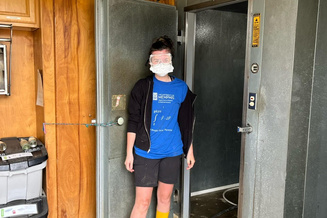
“I wanted to serve outside of my comfort zone and explore something new,” Focazio said. “As a physics major, animal welfare and conservation work was very outside my area of expertise, so I was really excited to be able to learn about something totally new.”
Appalachian State University’s ASEs give students opportunities to engage in service with communities while learning about social and environmental issues. Programs take place during academic breaks and range from local experiences in Boone to international opportunities.
Raey Block, CEL graduate assistant for ASE, said the programs are designed to go beyond the physical act of service by incorporating dialogue and reflection.
“Combined, these aspects come together to create quality service experiences,” Block said. “Beyond that, dialogue and reflection — especially when students engage meaningfully in both alongside their peers — are important skills to develop personally, academically and professionally.”
For Focazio, that combination of service and learning took shape at The Elephant Sanctuary.
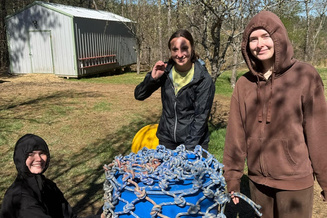
“It was so inspiring to see how something as seemingly simple as taking care of a single elephant impacts so many communities, jobs and aspects of conservation.”
Focazio learned that meaningful change can begin with small contributions close to home.
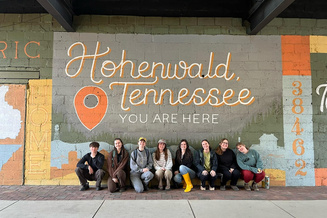
Focazio said working alongside the sanctuary’s community partners taught her the importance of listening to those already engaged in the work. Instead of approaching the experience solely as an opportunity to give, she found herself learning from the people and environment around her. She explained,
“It wasn’t just about being there to volunteer time, but I feel like we gained just as much as we gave.”
Reciprocity is central to the ASE model. Block said participants are encouraged to build relationships with community partners through a combination of service, education, reflection and dialogue.
The goal is also for students’ engagement to continue after they return to campus. “We encourage participants to engage further with the community issue from their ASE and any others they’re interested in,” Block said.
For Focazio, those lessons also extended to her understanding of leadership as an Honors College student. She shared,
“My ASE made me think about what it means to be a leader and a person who serves others and how leadership doesn’t always mean being the person in charge. It can also mean leading yourself into an unfamiliar environment and contributing where you are needed.”
For Focazio, an experience that began with a desire to venture beyond her comfort zone ultimately became a lesson in the value of starting small—and in recognizing that learning, leadership and service can happen far beyond the boundaries of a classroom.